IAHR Brings the Global Ice Research and Engineering Community to Shanghai -- Summary of the 28th IAHR International Symposium on Ice
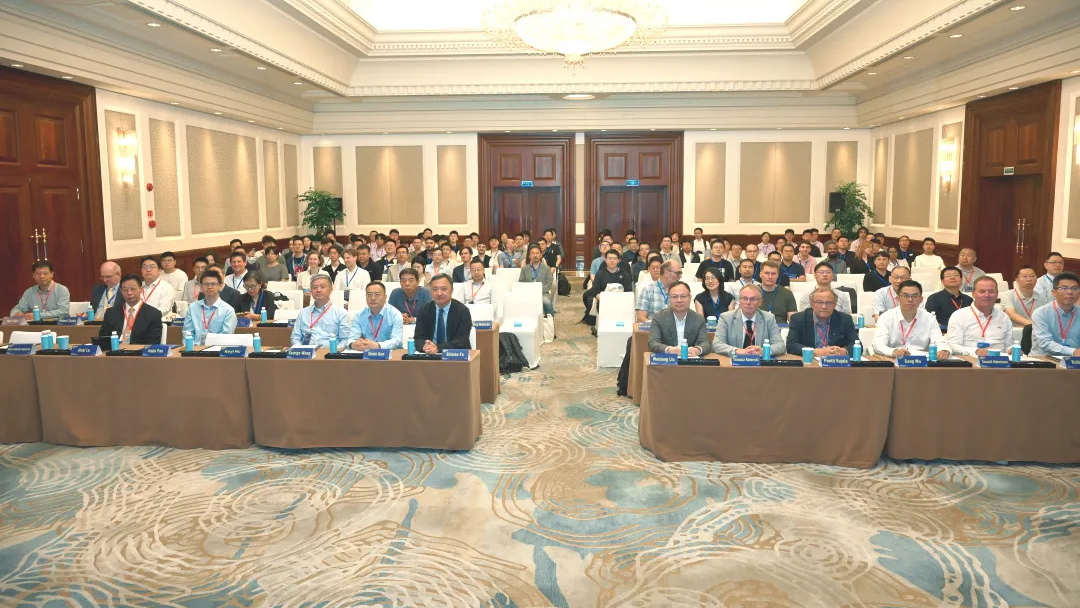
The 28th IAHR International Symposium on Icewas held in Shanghai, China, from 14 to 18 June 2026, bringing together 221 researchers, engineers, industry representatives and students from 15 countries and regions. Held under the auspices of the IAHR Technical Committee on Ice Research and Engineering, the symposium was jointly organised by Shanghai Jiao Tong University, the Marine Design and Research Institute of China (MARIC) and Dalian University of Technology. The event provided an international platform for exchanging recent scientific findings, engineering developments and practical experience in ice science and ice engineering.
Keynote Lectures
The symposium opened on 15 June with four keynote lectures addressing major scientific and engineering challenges in cold and polar regions.
Pentti Kujala reviewed the challenges associated with developing ships for polar waters. Tomasz Kolerski discussed vulnerability and risk related to rare river-ice events. Ruibo Lei presented the achievements of previous International Polar Years and China’s priorities towards the Fifth International Polar Year in 2032–2033. Gang Wu of the Marine Design and Research Institute of China (MARIC) introduced a digitally and intelligently driven research and development approach for polar marine equipment.
The keynote lectures connected fundamental ice research with climate resilience, polar shipping, equipment development and emerging digital technologies.
A Broad Technical Programme
IAHR 2026 featured three parallel tracks and seven thematic sessions, including two special sessions. The programme covered river, lake and reservoir ice; sea ice; ice mechanics and hydraulics; ice interaction with ships and structures; shipping in ice; polar ships and offshore structures; remote sensing and forecasting; climate-change impacts on the cryosphere; and environmental issues in cold regions.
Presentations highlighted advances in ice-load prediction, sea-ice mechanics, ice-induced structural response, polar ship performance, ice monitoring, numerical simulation, artificial intelligence and digital-twin technologies. Participants also discussed how field observations, laboratory experiments, remote-sensing products and numerical models could be more effectively combined to support engineering design and operational decision-making.
The closing lectures presented recent progress in ice research and engineering in China, propulsion technologies for icebreakers, and experimental and numerical investigations of the mechanical behaviour of sea ice by Xinlei Guo, Samuli Hänninen and Qingkai Wang respectively.
Technical Visit
On 18 June, participants visited the Minhang Campus of Shanghai Jiao Tong University. The programme included visits to major ship and ocean engineering research facilities, providing opportunities for exchange on model testing, experimental methods, measurement technologies and the engineering application of research results.
Strengthening International Cooperation
IAHR 2026 strengthened connections among universities, research institutes, ship designers, engineering organizations and polar-operation stakeholders. The discussions demonstrated the increasingly interdisciplinary nature of ice research and highlighted the importance of international cooperation, shared experimental facilities, coordinated observations and benchmark datasets.
IAHR extends its sincere thanks to the organisers, scientific and local committees, speakers, session chairs, volunteers and all participants whose contributions made IAHR 2026 possible.